
Yesterday, Dec 3 2024, at the Future Trends Forum (FTF) #EmbodiedAIFroum, Eden Shochat delivered a thought-provoking presentation on the shifting dynamics of artificial intelligence research and investment. The session highlighted not only the global competition in AI development but also the ethical and strategic challenges that come with these advancements.
China’s Research Dominance and Global Shifts
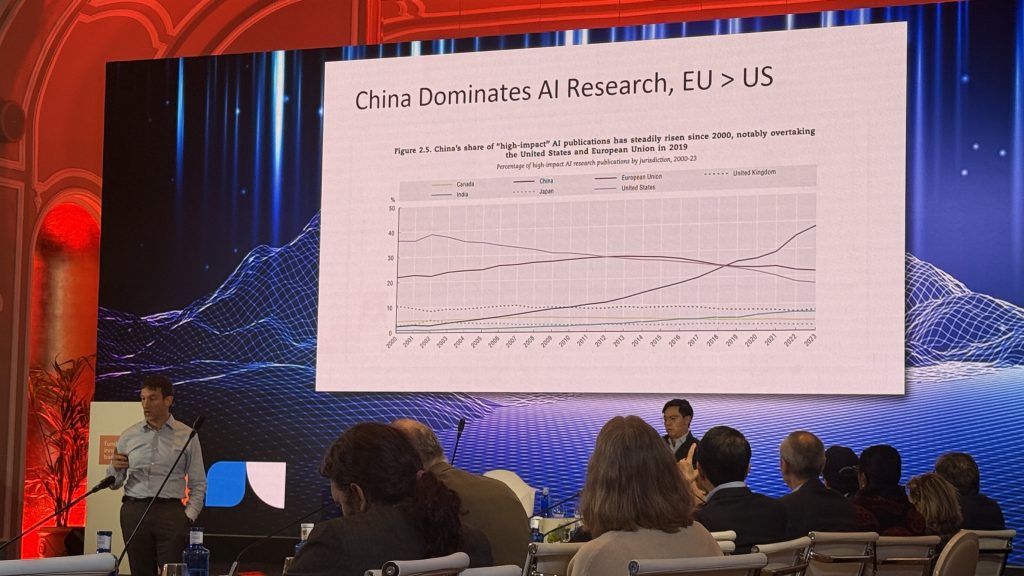
Shochat began by illustrating China’s rapid ascent in AI research output. The data revealed that China’s share of “high-impact” AI publications has significantly outpaced both the United States and the European Union since 2019. This trend is a stark reminder of how geopolitical priorities shape innovation, raising important questions about how nations prioritize their investments in technology and education.
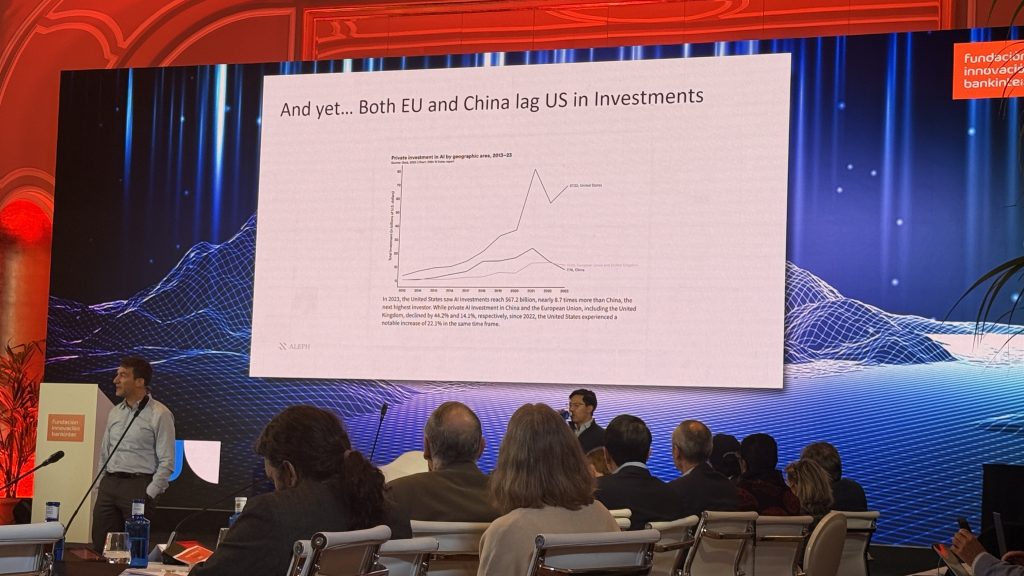
Despite this dominance in research, the United States remains the leader in private investment, nearly 8.7 times higher than China in 2023. This discrepancy between research output and financial backing suggests differing strategies: while China invests heavily in public and institutional AI development, the U.S. relies on a robust private sector driven by venture capital.
Investment Gaps: A Strategic Opportunity or Risk?
The presentation also pointed out a critical gap: both the EU and China lag behind the U.S. in AI investments. Shochat emphasized that although venture capital investing in AI is challenging, the flow of money continues unabated, underscoring the perception of AI as one of the most transformative opportunities in human history.
For Europe, this poses both an ethical and strategic dilemma. Should the EU focus on increasing its AI investments to remain competitive, or leverage its position to establish itself as a global leader in AI ethics and regulation? Shochat’s insights suggest that the latter may be a more feasible route given the slower pace of European AI funding.
Takeaways: Regulation, Opportunity, and the Flywheel Effect
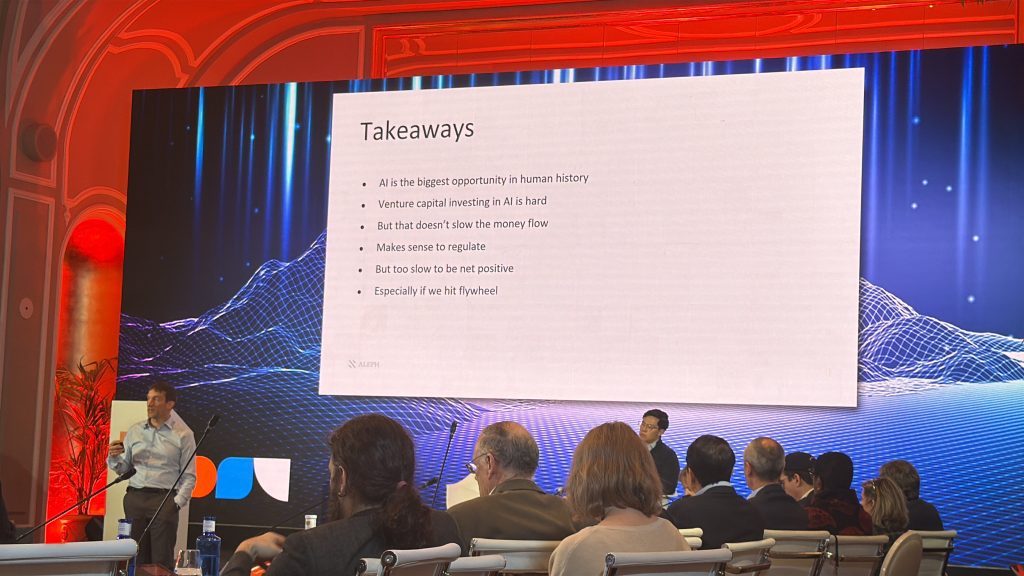
In closing, Shochat shared key takeaways that resonated deeply with the audience. AI represents an unparalleled opportunity for innovation, yet it comes with substantial challenges in regulation. The regulatory process, while necessary, is often too slow to be immediately impactful. This lag could delay the net positive effects of AI, especially if we enter the so-called “flywheel effect,” where technological progress accelerates beyond the capacity of traditional governance structures.
The ethical implications of this acceleration are profound. As AI systems become more integrated into our healthcare, governance, and social ecosystems, the need for balanced, thoughtful oversight grows exponentially.
A Call to Action for AI Ethics
Shochat’s presentation is a wake-up call for global stakeholders. As nations race to dominate AI research and investment, the ethical questions surrounding fairness, access, and governance must remain at the forefront. At AI Health Academy, we are committed to fostering these critical discussions and supporting the development of AI that benefits humanity as a whole.
The future of AI is not just about who leads in research or investment—it’s about who ensures that these advancements align with our shared values.
Leave a Reply